How Tides and Weather Shape Maritime Photography: An Explainer
Every harbor keeps two clocks. One is the light: the angle of the sun, the hour it clears the breakwater, the moment the cloud goes pink. The other is the tide table, and it quietly decides what will be in your frame when that light arrives. Stand on a quay at the perfect hour with a composition you have been planning for a week, and you may find that your foreground of wet stone, mooring rings and doubled masts is now a hundred meters of grey mud, and the boats are leaning on their keels. The photographers who consistently come back with good harbor work are not luckier. They check the second clock first.
The Tide Is a Scene Editor
Think of tide height as a volume control for the entire harbor. At high water, basins fill, ladders disappear, channels widen, and boats float close enough to the quay to reflect in it. At low water, the same spot reveals slipways, weed-covered stone, stranded dinghies, exposed pilings and whatever else the harbor normally keeps underwater. Neither state is better. They are two different photographs of the same place, and only one of them will be the one you wanted.
The practical rhythm is straightforward. Most coastlines run roughly two highs and two lows a day, with about twelve hours and twenty-five minutes between successive high waters. That means high tide arrives around fifty minutes later each day. If you shoot the same harbor every morning for a week, your water level drifts by hours by the weekend. Plan from the tide table, not from habit.
Tide range matters as much as the raw number. Around new and full moons, spring tides pull a bigger range; around the quarters, neap tides flatten it. A two-meter range in a shallow, silty harbor can empty the place entirely, while the same two meters in a deep stone port changes little except the position of a watermark. Learn how your harbor responds. Drying harbors, sill gates, tidal barriers and river mouths each have their own personality, and only local observation teaches it.
Wind: The Invisible Second Subject
Wind decides the texture of your water, and water is most of a harbor picture. An offshore breeze leaves the surface near the shore glassy while the outer channel still chops. An onshore wind pushes swell into the entrance and sends spray over the breakwater, which can be spectacular and also means standing well back. Wind blowing against a running tide in a narrow channel builds short, steep, angry water that snatches at mooring lines; it is superb for a fast shutter and hopeless for a thirty-second exposure.
Wind also supplies motion. Flags, halyards slapping, rigging, nets hung out to dry, a galley vent, gulls quartering into the breeze. Ask yourself what the wind is doing inside the frame, not just how it affects your comfort. Then find shelter: behind a breakwater, in the lee of a warehouse, inside a lock, under a bridge. A ten-minute walk to the sheltered side of the harbor often buys you the calm water the windward side cannot offer.
What to look for before you commit
- Direction: onshore, offshore or along the quay. It changes the whole mood of the water.
- Gusts versus average: the gust is what rocks the boats and blurs your foreground.
- Wind against tide: expect steep chop and restless hulls in channels and entrances.
- Fetch: how much open water the wind crosses before it reaches you tells you how big the chop will get.
Clouds Shape the Light
A clear blue sky is the least useful harbor weather there is. Contrast runs away from you: deep black shadows under the pier, blown highlights where the sun glitters on water, and a flat, empty ceiling. Overcast is the opposite gift. It turns the sky into one enormous softbox, and suddenly timber, rust, faded paint, rope and stone all hold detail at the same time. Harbor work often looks best in what most people call bad weather.
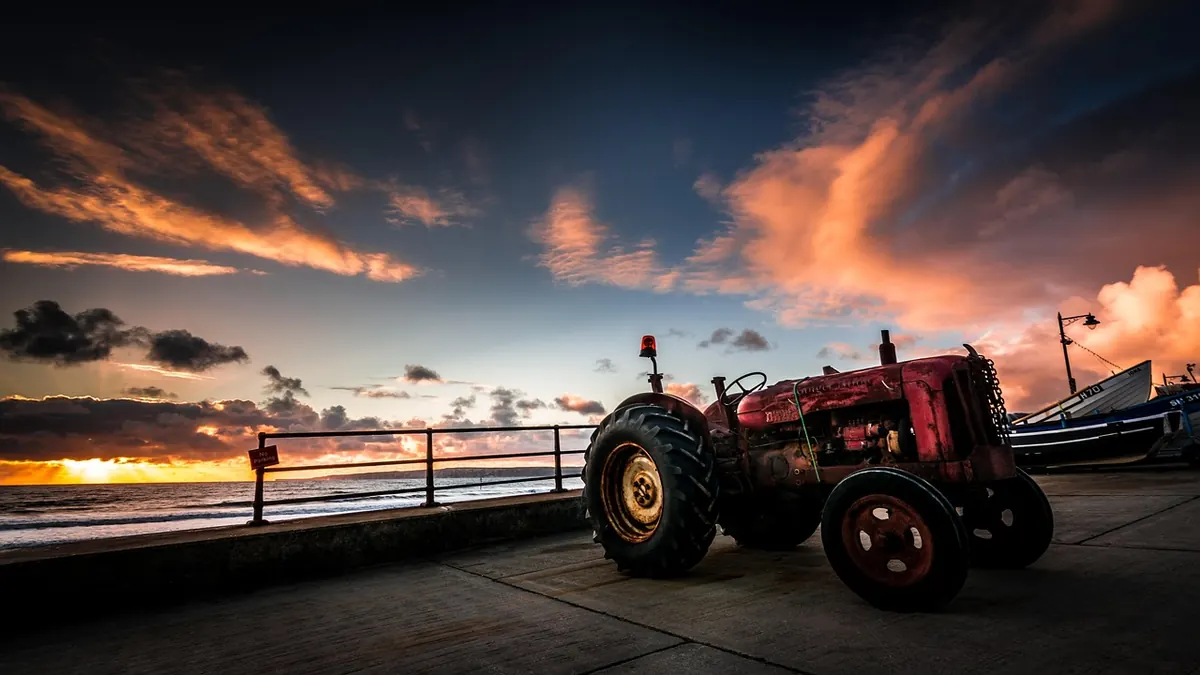
Broken cloud is the interesting middle. Patches of sun move across the water like spotlights, and you can wait for one lit strip of quay against a dark, shadowed background. Watch the horizon rather than the total cloud cover: a low band can swallow the last twenty minutes of sunset, while a narrow gap just above the sea can let the light flare under the cloud deck and turn the whole harbor amber. Give yourself half an hour before sunset to watch how the sky is actually behaving, not how the app said it would.
Weather fronts are worth tracking. As a front approaches you get a cloud wall, a wind shift and rain, and the light goes strange and metallic for a few minutes. Behind it, the air often clears and distant hills, cranes and lighthouse towers come up crisp for long lenses. Fog does something else entirely: it stacks the harbor into layers, isolates silhouettes, and erases masts one by one. Spring, when mild air moves over colder water, is a good time to look for it.
Reflections Reward Timing
A reflection needs four things at once: still water, the right viewing angle, enough depth, and a subject dark enough to stand out against its own mirror image. That combination is more common early than late. In the half hour after sunrise the air is often still, the breeze has not yet built, and harbor basins are glassy. By mid-morning the land has warmed, the sea breeze fills in, and the mirror is gone.
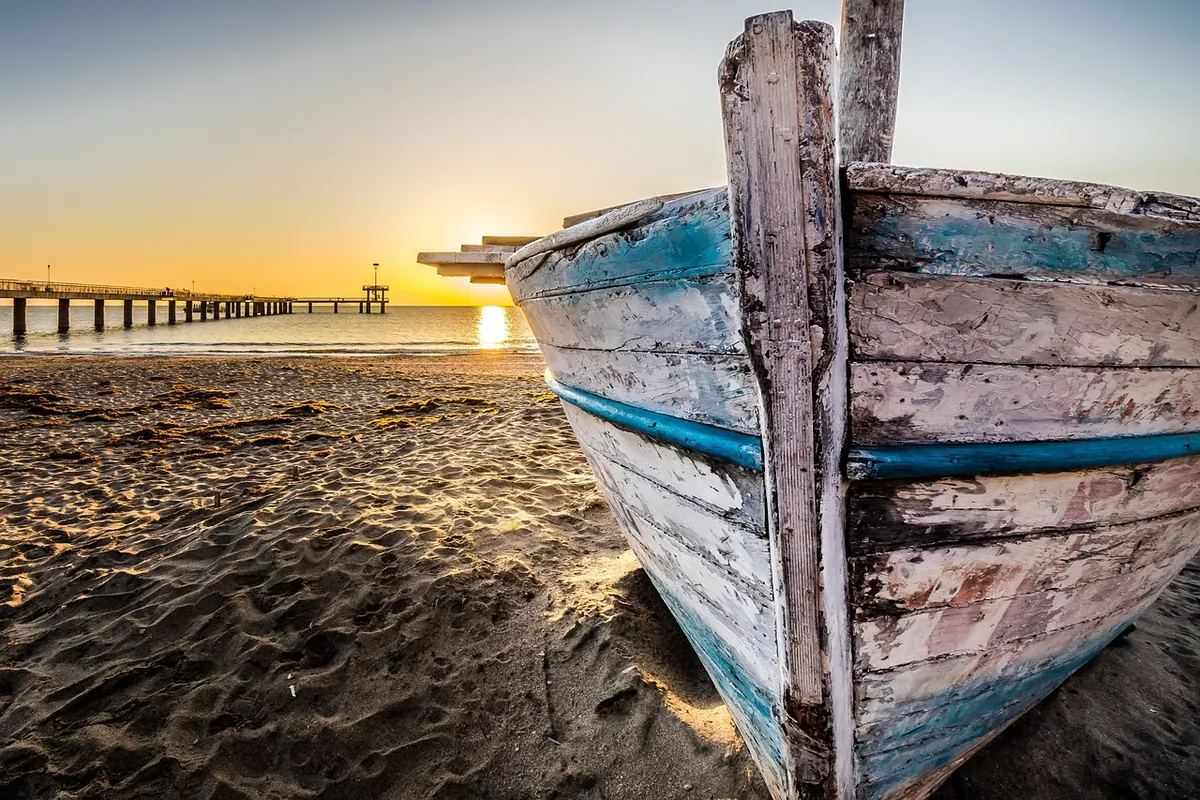
Tide does the rest. High water brings the surface close to the boats and the quay, so reflections sit where you want them instead of at the far end of an exposed bank. If you use a polarizing filter, twist it slowly and check the effect rather than leaving it at maximum: it deepens reflections at some angles and wipes them out at others, strongest roughly ninety degrees from the sun. And do not insist on a perfect mirror. A light ripple turns masts and lights into long vertical streaks, which can be more interesting than a flat copy; try shutter speeds from about a fifteenth of a second to half a second and see which streak you like.
Weather Windows, and Where to Stand
Read the forecast and the tide table together, in one glance. The useful combination is wind direction against tide state: wind with tide at slack water gives you calm, and wind against tide gives you energy. Add cloud to decide whether you want soft detail or hard graphic light, and add season to know what is likely: winter storms bring spray, dark skies and dangerous edges; summer brings haze and soft, even light that flatters paint and rope but rarely dramatizes a skyline.
Safety belongs in the planning, not in the story afterwards. Harbor stone is often wet, and slipways grow algae that behaves like ice. Never turn your back on swell on an open breakwater, keep one hand free on ladders and steps, wear soles with grip, and tell someone where you are going if you are shooting a working port alone before dawn. Boats move, ropes part, and vehicles on the quay do not expect a person crouching behind a bollard.
A Simple Field Routine
- Choose the picture first, then the tide height that makes it possible. Write down the height, not just "high tide".
- Look up the tide times for the nearest reference port, then apply the local difference for your harbor and note when slack water falls.
- Check wind direction, strength and gusts, and think about whether it is fighting the tide.
- Check cloud and the sun's position, and pick the side of the harbor that will be lit or sheltered.
- Arrive forty minutes early. Shoot the water while it is still, then turn to the light as it changes.
- Keep a short log: date, tide height, wind, cloud, what worked. After a season you will be able to predict your harbor instead of guessing.
No harbor looks the same twice, which is the whole reason to keep returning. Learn the tide clock and the weather, and you stop hoping for luck. You start arriving at the right place, at the right height of water, with the right sky above it.
Photo: TimHill / Pixabay