Reading Harbor Light: A Beginner's Guide to Time of Day and Weather
There is a particular ten minutes in a harbor when the water turns the color of a knife blade and every rope, cleat, and rusted staple starts to glow. Then it's gone. Newcomers chase subjects, a trawler, a tug, a row of dinghies, while the photograph is usually decided by something far less cooperative: the hour and the weather.
The same hull can look like painted plastic at noon, like hammered copper at seven in the evening, and like something out of a northern painting under a February overcast. Here is how to read that light before you raise the camera.
Morning: The Harbor as a Mirror
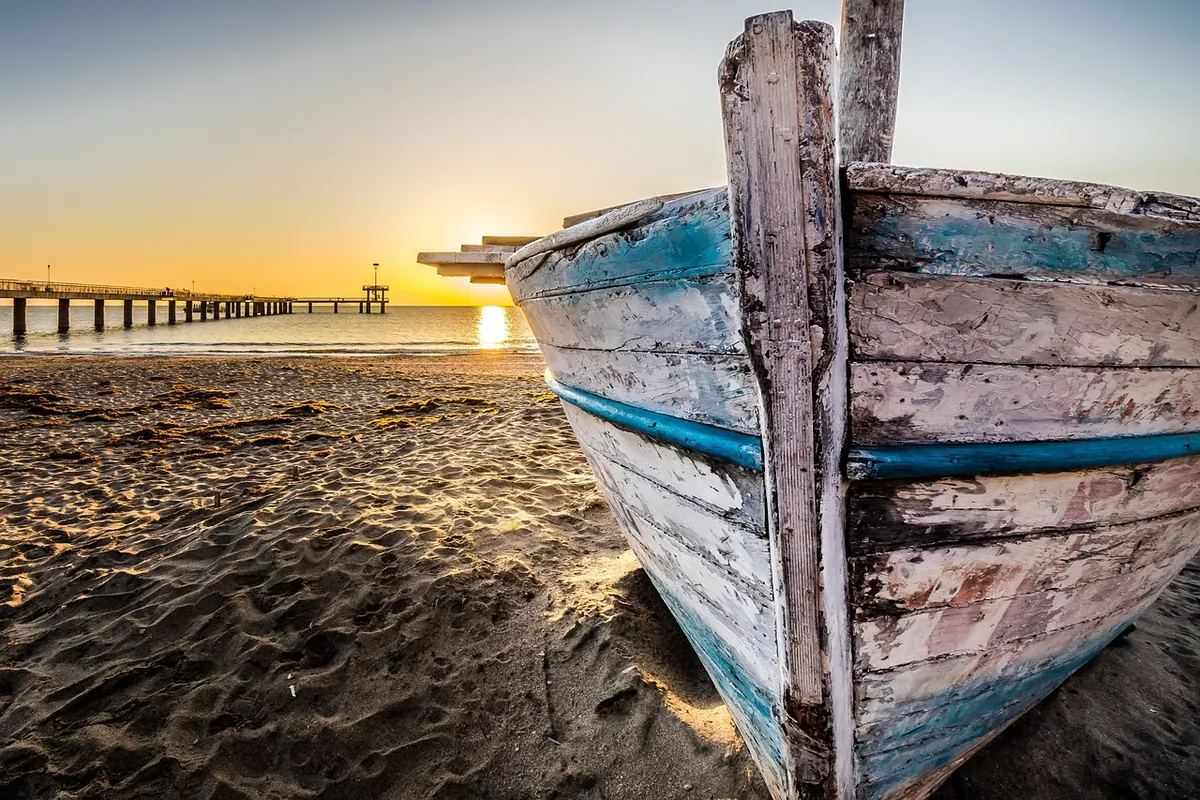
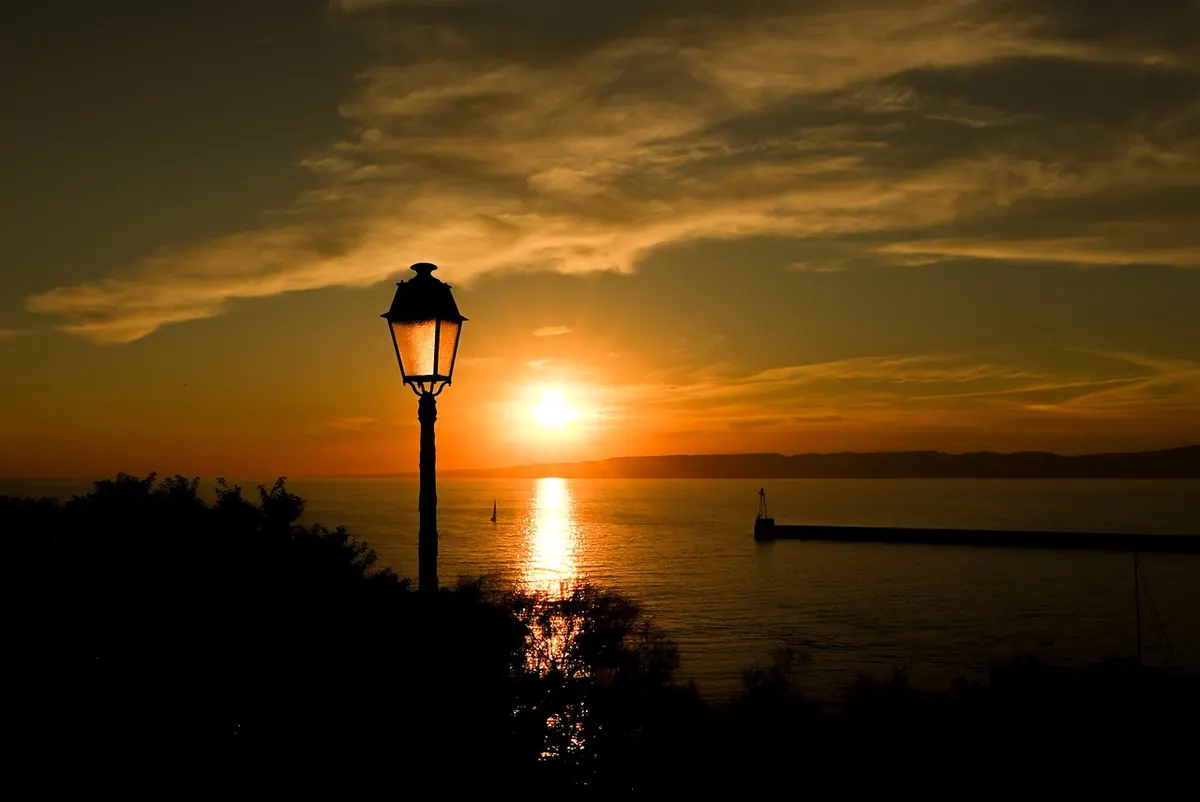
Before sunrise the harbor is a soft, cool place. Sky and water sit within a stop or two of each other in brightness, which is why long exposures here look almost like drawings: pale grey water, black pilings, the thin line of a mooring rope. Arrive forty minutes early, set the tripod low on the quay, and shoot at two to ten seconds. Boats at anchor barely move at that hour, and the water goes smooth enough to double every mast.
Then the sun arrives and the scene changes character. Low sunlight rakes across the harbor at a shallow angle, which means it does not just light surfaces, it finds them. Hull planking, rust streaks below a scupper, the nonskid pattern on a foredeck, salt dried into a canvas cover: all of it becomes visible for twenty minutes and then flattens out.
Two things to watch. Your camera's auto white balance will try to neutralize that warmth and hand you a grey, slightly lifeless file, so shoot RAW, set daylight or shade, and adjust by eye. And morning light is directional: walk the quay and find the angle where the sun grazes the hull rather than hitting it face-on. A fishing boat lit from the side at eight in the morning has more shape than the same boat lit at eleven.
Midday: Hard Light, Honest Color
Around noon the sun is high, shadows are short, and contrast is brutal. Most people put the camera away. That is a mistake, but it is a mistake you have to shoot differently.
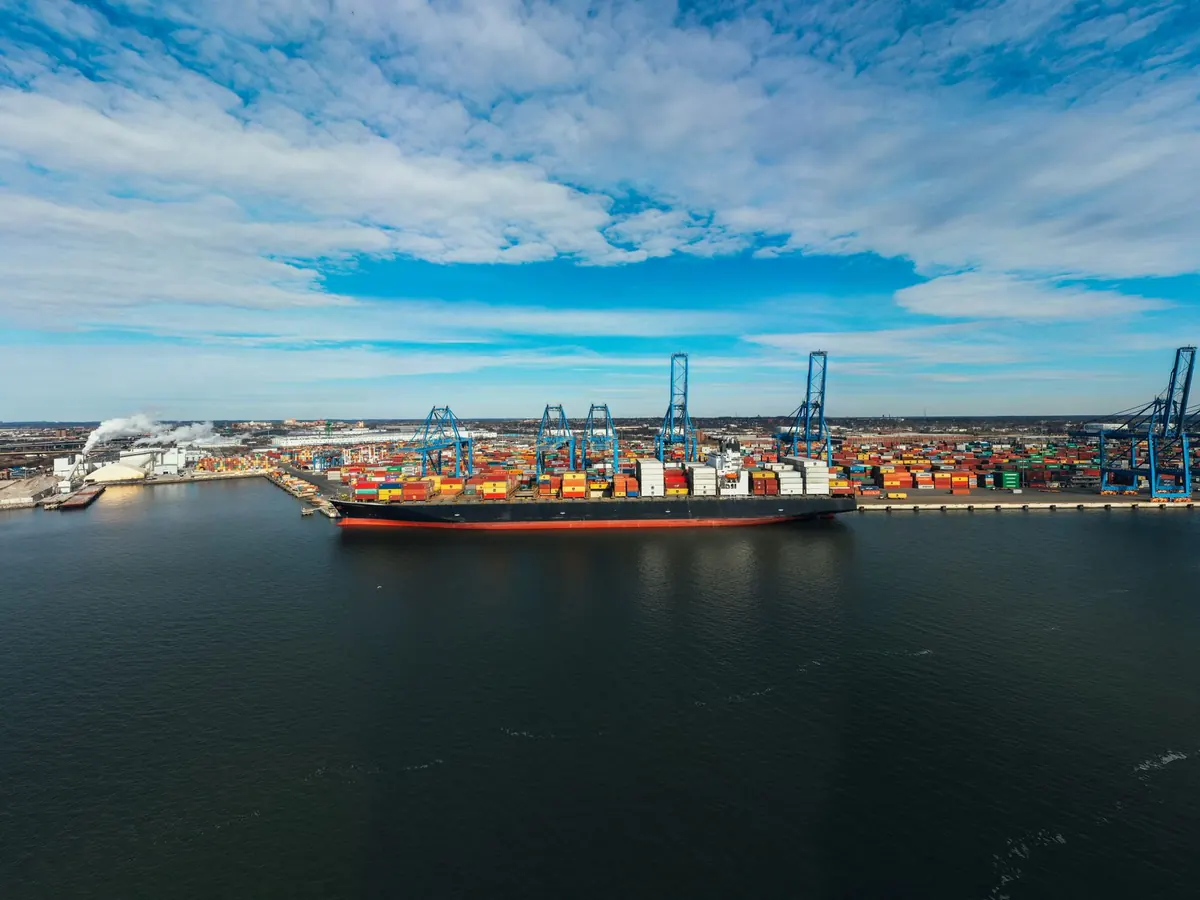
Midday is when paint reads truest. The red of antifouling, the orange of a life ring, the deep blue of a hull stripe: these are their real colors at noon, uncolored by sunrise or by a storm cell. If your subject is color, this is your hour. Midday is also good for texture in the shade, under a pier, in the shadow of a container stack, inside an open wheelhouse, where light bounces off the water and up into the space and does something no flash will do.
The problems are practical. White fiberglass and white superstructures clip easily. Meter for the brightest part of the hull and let the shadow side go dark, then lift it later, rather than blowing out a highlight you cannot recover. A polarizing filter earns its place here; it cuts glare on paint and water and brings back color the reflection was hiding. Screw it on, then rotate slowly while watching the surface, not the sky.
And use the hard shadows instead of fighting them. Overhead sun turns bollards, ladders, and crane arms into graphics. Get high, on a bridge, a breakwater, a stairwell, and shoot down at the deck patterns.
Overcast: The Harbor's Softbox
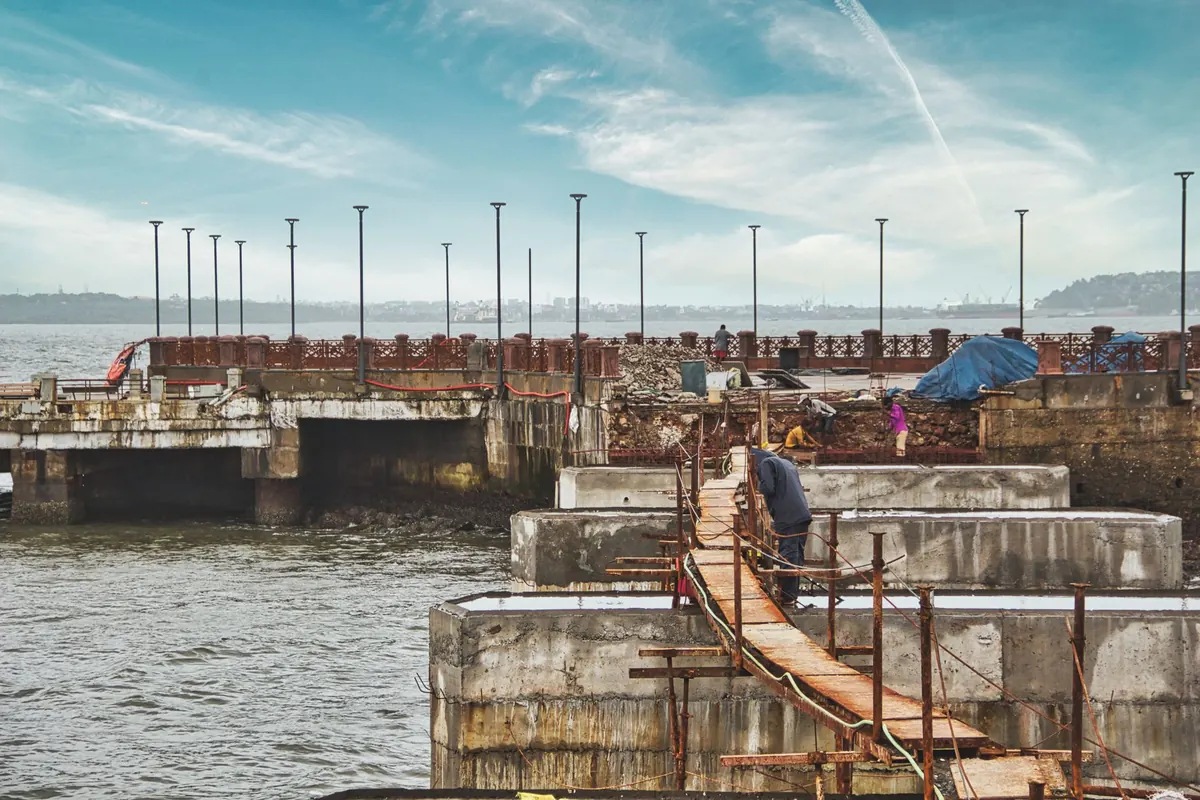
A flat grey sky does two things at once. It removes the shine from metal, and it reveals everything else. Galvanized steel, wet concrete, coiled rope, the grain of a wooden cap rail: under cloud these stop being highlights and start being surfaces.
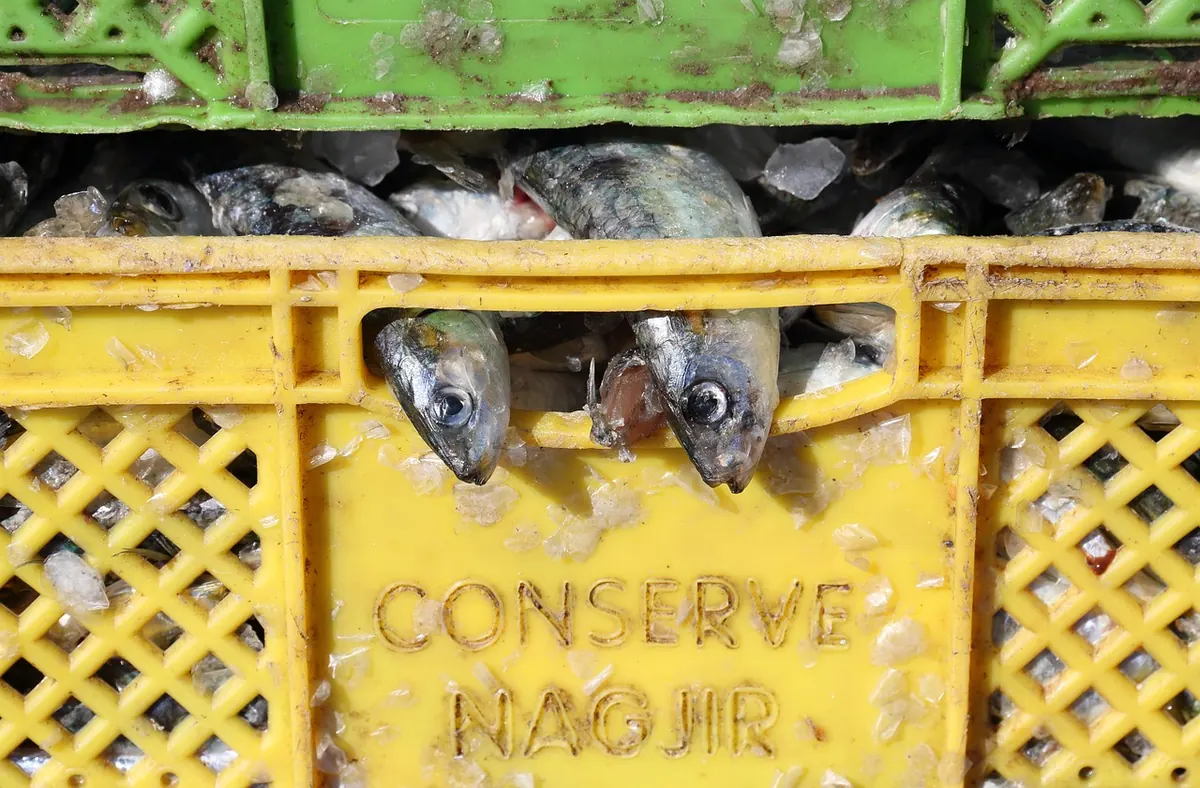
Color behaves differently too. Saturated objects, fenders, tarps, buoys, the lichen on a stone quay, separate cleanly from the grey around them because nothing else in the frame is competing. A yellow oilskin against a white boat against a slate sky is a photograph. The same oilskin at noon in full sun is just a yellow shape in a busy frame.
The trap is the sky itself. An even overcast sky is a large, bright, featureless rectangle, and it will eat your exposure and your composition both. Two solutions: exclude it, or own it. Excluding is easy. Tilt down, get closer, use the sky as a thin grey band along the top edge. Owning it means waiting for structure, the moment a break in the cloud gives you a lighter patch behind the subject.
Overcast is also the friendliest light for people. If you want the face of a deckhand or a boatyard worker without harsh shadows, this is the weather to hope for.
Storm Light: Drama With Rules
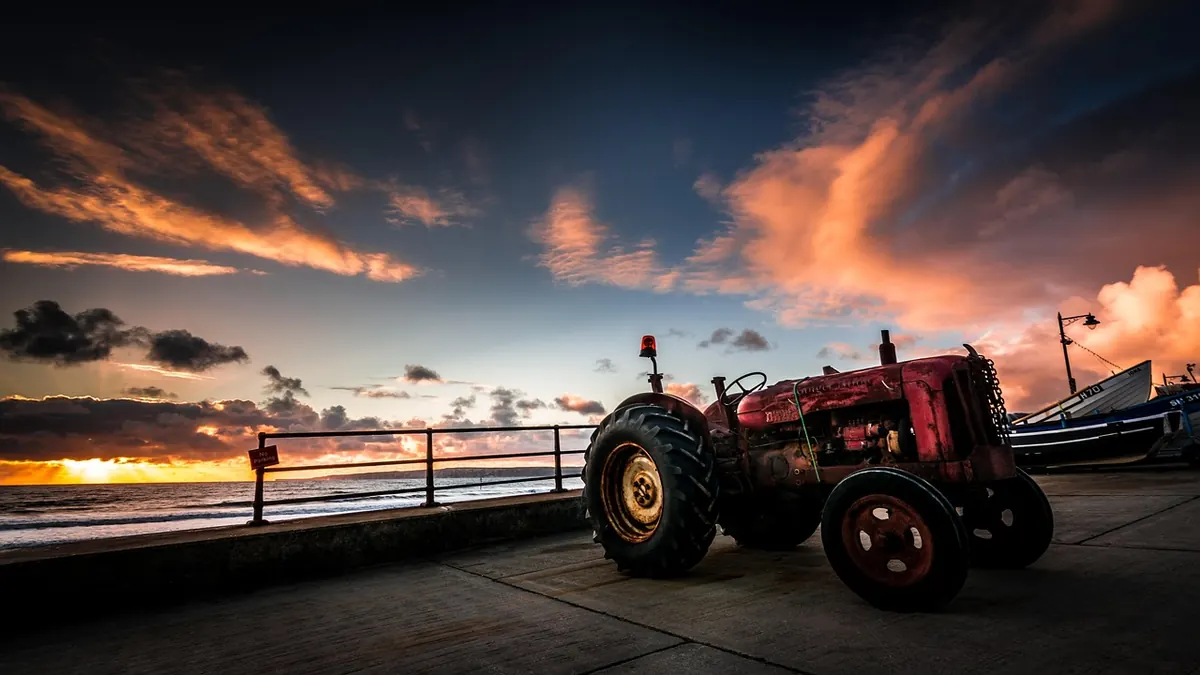
The most dramatic harbor light arrives in the ten or fifteen minutes before a squall line hits. The sky goes the color of a bruise, the air clears, and anything still catching sun, a white wheelhouse, a yellow crane, a lighthouse, sits in front of it like a lit object on a dark table. Expose for the highlights, let the sky go deep, and the picture has weight.
Watch for rain shafts over the water. They read as soft vertical smears and give distance to a flat horizon. After the front passes, turn around: the cleared air and low sun behind you often produce a rainbow or a lit rain curtain.
Then the rules.
- Keep your back to the water, not your face. Waves on a sea wall arrive faster than people expect. Photograph from above the splash line, never below it.
- Do not stand on an exposed quay with a tripod during lightning. Metal railings, masts, and carbon tripods are exactly what you do not want to be holding. Shoot from a car, a doorway, or a shed.
- Carry something to dry the front element. Sea spray is harmless to a filter and fatal to a photo. A microfiber cloth and a rain cover, or a shower cap over the lens hood, will save the session.
- Underexpose a little on purpose. Storm scenes that are "correctly" exposed tend to look like grey afternoons. A third to two thirds of a stop down gives you the mood you actually saw.
What Water, Metal, and Paint Do With Light
Same hour, three different materials, three different results. It helps to know what each one is likely to do before you commit to a position.
- Water: a mirror when calm, a faceted surface when choppy, opaque green-brown over shallow harbor mud, blue-grey when reflecting cloud. It shows you the sky more than it shows you itself.
- Metal: stainless and galvanized steel are specular. They have almost no color of their own, only reflections. In sun they become bright lines and blow out; under cloud they go quiet and show shape.
- Gloss paint: holds a highlight and loses local color. Chalky, matte paint holds color and loses shape. Older working boats often photograph better than new ones because their surfaces break up the light.
- Teak, rope, canvas: low-reflection, high-texture. Raking light is the only light that does them justice.
- White fiberglass: the hardest thing in the harbor. It carries almost no tonal information and clips first.
A Routine You Can Repeat
Light reading gets easier once it becomes a habit rather than a decision made at the water's edge.
- Check the sky before you pack, and check the wind with it. Wind decides whether you get reflections or chop.
- Decide what the light is good for, not what you want to shoot. Overcast means details. Storm means wide drama. Noon means color and graphics. Sunrise means silhouettes and glassy water.
- Walk the subject once without the camera. Find the angle where the light describes the shape.
- Set white balance manually, expose for the highlights, and read the histogram instead of trusting the rear screen in daylight.
- Stay ten minutes past the moment you think it is over. The last light is usually the good one.
The harbor rewards patience more than equipment. Learn these four kinds of light and you will rarely be stuck, because every forecast offers you one of them, and the boat will still be there tomorrow, waiting to look completely different.
Photo: mariya_m / Pixabay